
A truthful history is the foundation upon which not only a community stands, but an entire nation. We must know, remember, and share our past. And although the history of modern Australia does not stretch back millennia, it contains pages we can be proud of without the slightest hesitation.
Despite all the political challenges of that time, our forces were formed exclusively from volunteers. It was an army of free people. The ANZACs entered history as the only military contingent that knew no systemic desertion, and where the execution of their own soldiers was strictly forbidden. We became one of the few nations whose principal day of remembrance is dedicated not to the triumph of victory, but to honoring the lives and sacrifice of young people.
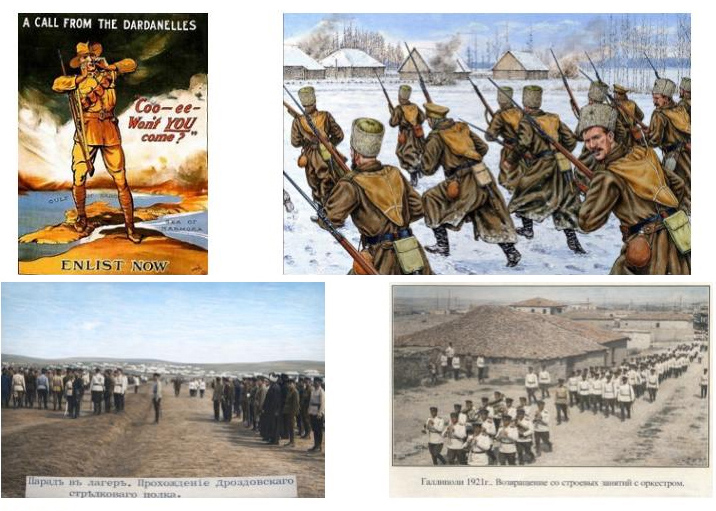
For us, Russian Australians and residents not only of Brisbane but of all Australia, the Gallipoli campaign holds special significance. A little-known but deeply symbolic fact: the largest contribution to the ANZAC ranks among volunteers of non-British origin was made by citizens of the Russian Empire. Around a thousand people from the Russian Empire fought under the Australian flag, contributing to the birth of our military legend.
The spiritual connection between our peoples was formally affirmed in Brisbane. The first solemn memorial service for those fallen, in the “Great War” was held at St John’s Cathedral. This Requiem, which became a prototype for today’s ANZAC Day, took place in the presence of high-ranking officials, including the Imperial Russian Consul and the Consul of the French Republic. It was here, with the participation of Canon David John Garland—architect of ANZAC Day—who later took an active role in founding the first Russian Orthodox parish in Australia, that the foundations of our Australian national tradition of remembrance were laid.
The Russian Tragedy: From Saving Paris to the Shores of Gallipoli
When speaking of “boat people,” the modern observer rarely recalls the tragedy of 1920. That year, a flotilla of 126 vessels—from warships to private yachts—approached the shores of Gallipoli. It was the exodus of an entire civilization: 145,693 people, including civilians, women, and children, fleeing the horrors of civil war.
Here lies a bitter irony of history. In 1916, the Russian Empire carried out the Brusilov Offensive, destroying the Austro-Hungarian army and forcing Germany to redeploy divisions from the Western Front. This effectively saved Paris from capture. Yet in 1920 at Gallipoli, the “grateful” Allied French immediately requisitioned the best ships and cargoes as “payment” for minimal rations.
A Legacy Carved in Stone
Finding themselves on a war-ravaged land without any amenities, the Russian exiles showed extraordinary resilience. Without protest or unrest, they built infrastructure from scratch: churches, schools, workshops, even theatres. They taught the local population European methods of work at a time when Turkey was only beginning to modernize. The memory of this peaceful creation still lives among the residents of Gallipoli.
Gallipoli became a unique point on the map of the world: a place where the Australian army was born, and a place where the army of the Russian Empire ceased to exist as an organized force on its own soil, while preserving its honor in exile.
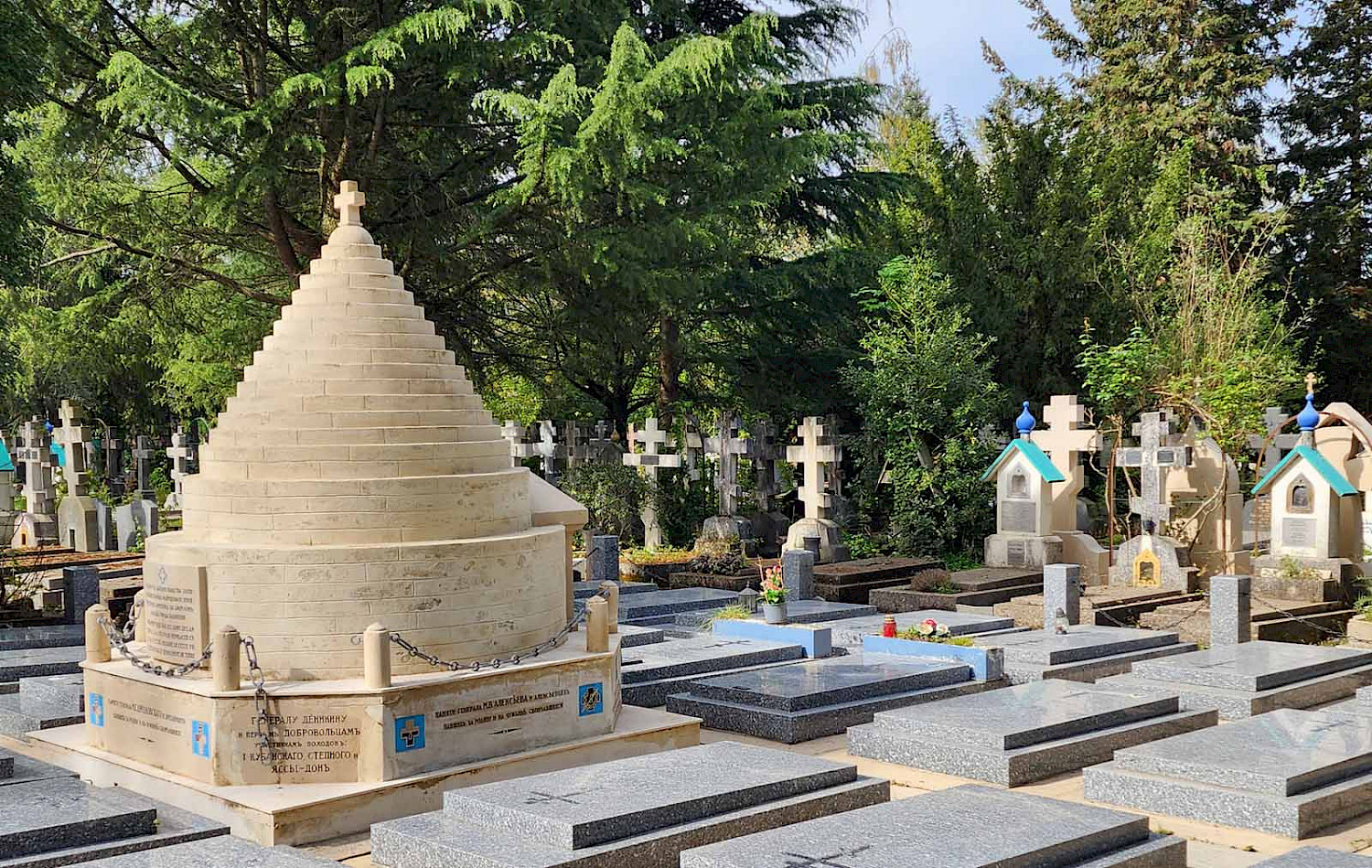
In 1921, when a monument to the fallen soldiers of the Russian Army was erected on the barren shore of Gallipoli, the commander of the 1st Army Corps, General Alexander Pavlovich Kutepov, addressed his soldiers with words that became legendary: “I order you to remember that we are soldiers of the Russian Army, that we are not refugees, that we are the only organized force that has preserved honor and loyalty to the Motherland.”
This appeal was not merely rhetoric but a program for survival. In conditions of total poverty and political pressure, General Kutepov demanded that his men maintain military formation, wear uniforms, and uphold discipline so as not to become a “crowd of petitioners.”
The monument itself, built by soldiers from the stones of ruined houses, bore a brief but profound inscription echoing this call:
“Grant rest, O Lord, to the souls of the departed. Gallipolians. 1920–1921. Remember, O Motherland, those who fell in the struggle for your honor and freedom.”
It is noteworthy that this very principle—“we are not refugees, we are warriors”—allowed the Gallipolians to preserve their dignity and later become the backbone of many Russian communities abroad, including here in Queensland. It is a reminder to each of us: history does not tolerate oblivion.
Today, on the site of the old monument to Russian soldiers destroyed by an earthquake, a new memorial has been erected. We, Russian residents of Australia, must—this is our direct duty—ensure that our grandchildren say with the same pride:
“WE REMEMBER” — “LEST WE FORGET.”